
CE vs PE: How to Choose the Right Strike Price for Intraday Trading
If you are new to trading Nifty 50 options, opening an Option Chain for the first time can feel like staring into the Matrix. You see dozens of strike prices, flashing numbers, and vastly different premiums.
The basic rule is easy enough to grasp: If you think the market is going up, you buy a Call Option (CE). If you think the market is going down, you buy a Put Option (PE).
But the million-dollar question that dictates whether you make a profit or lose your capital is this: Which specific strike price should you buy?
Choosing the wrong strike price is the #1 reason retail traders can be 100% correct about the Nifty’s direction but still end the day in a loss. Here is the practical guide to picking the right strike for intraday trading.
The Three Zones of the Option Chain
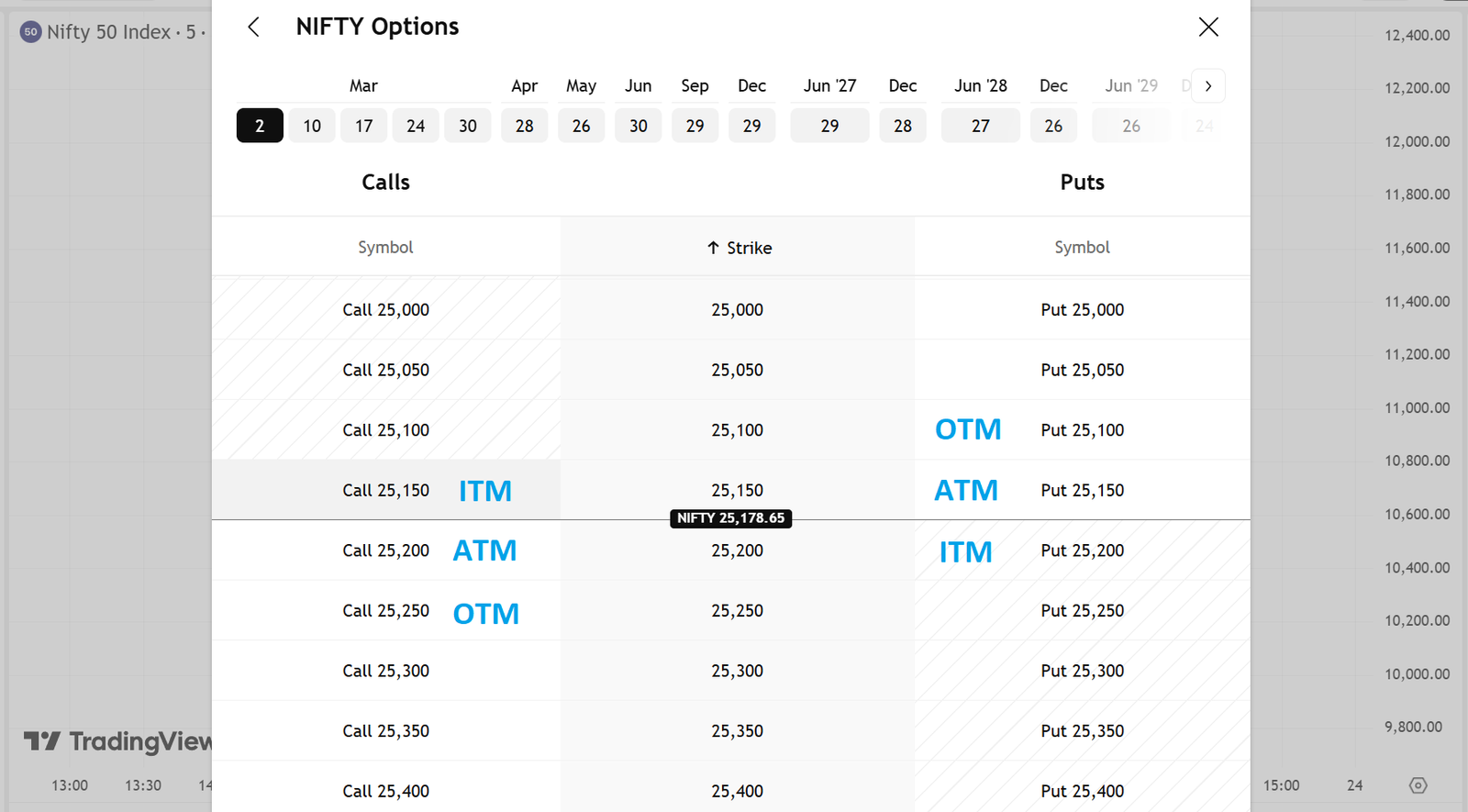
Before you click the “Buy” button, you need to understand “Moneyness.” Every option on the chain falls into one of three categories:
1. In-The-Money (ITM)
- What it is: For a CE, these are strike prices below the current Nifty spot price. For a PE, these are strike prices above the current spot price.
- The Reality: These options are expensive. Because they already hold “intrinsic value,” you pay a higher premium. However, they are the safest to buy because they have a high “Delta” (usually 0.50 to 1.00). This means if the Nifty moves 50 points, your option premium will move very closely with it.
2. At-The-Money (ATM)
- What it is: The strike price closest to where the Nifty is currently trading right now.
- The Reality: This is the absolute sweet spot for most intraday breakout strategies. The premium is reasonable, and the Delta is around 0.50. It gives you a great balance of risk and reward without freezing your entire capital.
3. Out-Of-The-Money (OTM)
- What it is: For a CE, these are strike prices far above the current Nifty price. For a PE, they are far below.
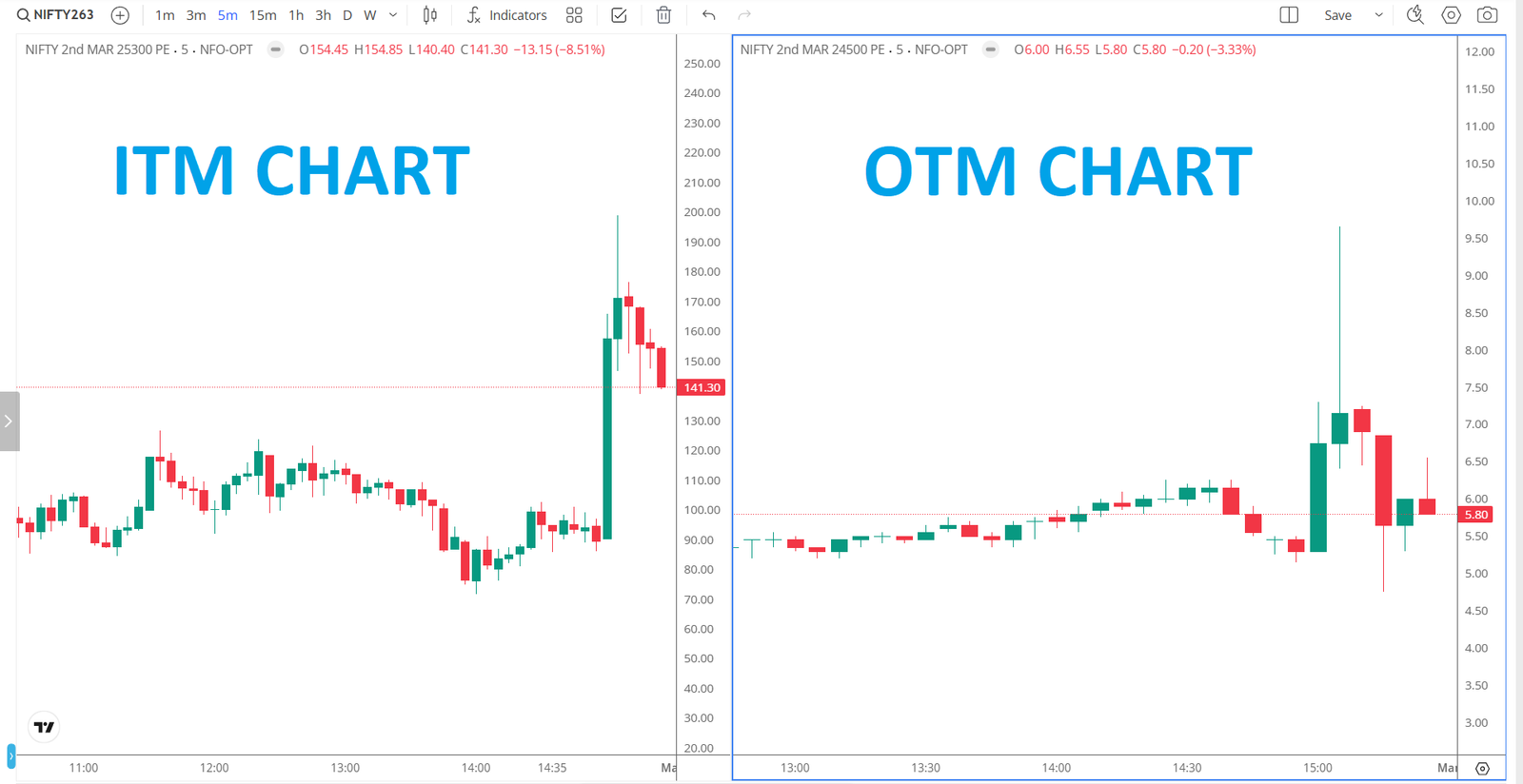
- The Reality: This is the retail trader trap. OTM options are incredibly cheap (e.g., ₹15 or ₹20), which tempts beginners into buying massive quantities. But OTM options are pure “time value.” If the Nifty doesn’t make a massive, violent sprint in your direction immediately, that cheap premium will decay to zero by expiry.
How to Choose the Right Strike for Your Strategy
Your choice of strike price should completely depend on how long you plan to hold the trade.
Scenario A: Fast Scalping or Breakout Trading (e.g., ORB Strategy)
If you are trading an Opening Range Breakout (ORB) or a quick momentum scalp, you are only planning to stay in the trade for 5 to 15 minutes.
- The Best Choice: Buy At-The-Money (ATM) or slightly In-The-Money (ITM).
- Why: You need the option premium to spike the exact second the Nifty breaks out. ATM and ITM options react instantly to the underlying spot chart.
Scenario B: Trend Following (Holding for hours)
If you spot a major trendline breakdown on the charts and plan to ride the trend for the entire afternoon, time decay (Theta) becomes your biggest enemy.
- The Best Choice: Buy deep In-The-Money (ITM) or shift to the Next Week’s Expiry.
- Why: Deep ITM options behave almost exactly like Nifty Futures but with defined risk. They do not lose value rapidly as the hours tick by, allowing you to peacefully hold your winning trade without watching the premium melt.
The Golden Rule for Options Buyers
Never buy an option just because it is “cheap.” A ₹10 option that goes to ₹0 is a 100% loss. A ₹150 option that goes to ₹180 is a 20% gain.
Always trade the chart, not your P&L. Identify your setup (like a VWAP bounce or a Supertrend signal), check the spot price, and instantly select the ATM strike. Protect your capital, respect the stop loss, and stop feeding your money to option sellers!