
Insurance Stocks in Focus: Hidden Opportunities in India’s Financial Markets
When retail traders open their broker apps at 9:15 AM, where do they immediately look? They look at the high-flying banking stocks, the tech giants, or the volatile metal sector.
Almost nobody wakes up excited to day-trade insurance stocks. They are viewed as boring, slow, and purely for long-term retirement portfolios.
This perception is exactly why professional swing traders love them. Because the retail crowd ignores the insurance sector (companies like HDFC Life, SBI Life, ICICI Prudential, and LIC), these stocks are heavily controlled by institutional money. And where there is institutional money, there are clean, incredibly respectful technical chart patterns.
Here is why you need to add India’s top insurance stocks to your active watchlist, and how to trade them for consistent positional gains.
The Defensive Hedge
The Indian financial market is heavily reliant on credit cycles and interest rates. When the RBI raises rates or inflation spikes, traditional banking stocks often suffer sudden, violent sell-offs.
Insurance companies, however, operate on a different financial model. They collect massive amounts of premium cash upfront and invest it into debt and government securities. When interest rates rise, their investment yields actually improve.
- The Trading Edge: When the Bank Nifty is crashing and the broader market is in a panic, insurance stocks often act as a defensive safe haven. Smart money rotates their capital out of high-risk banks and parks it into SBI Life or HDFC Life. If you spot this sector rotation early, you can catch massive counter-trend rallies.
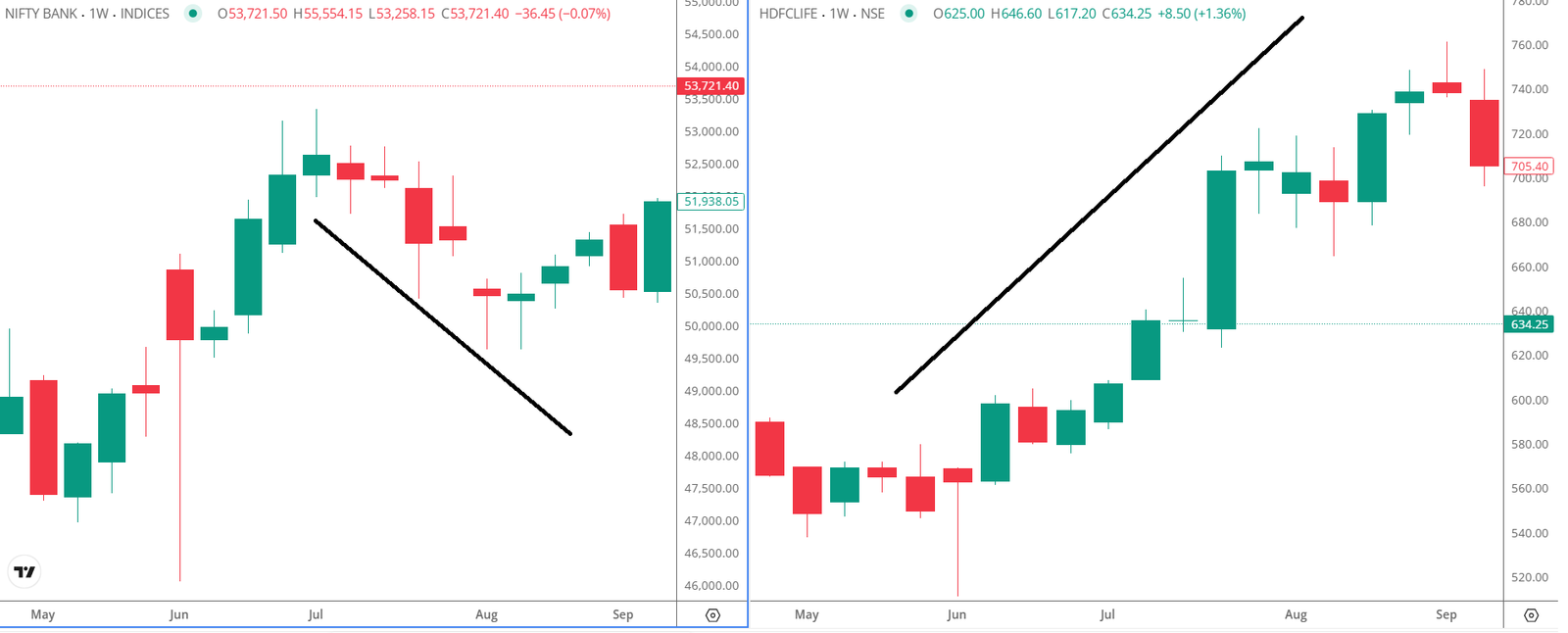
Why Insurance Stocks are Perfect for Technical Traders
Because these stocks lack the chaotic, algorithm-driven retail volume of a stock like HDFC Bank, their price action is much smoother.
- Trendline Respect: If you draw a daily timeframe trendline on ICICI Prudential, it will often respect that line to the exact rupee. Fake breakouts (bull traps) are far less common here than in the highly manipulated banking sector.
- The Breakout Strategy: Insurance stocks are perfect for the “Volatility Contraction Pattern” (VCP). They will often consolidate in a tight, boring, sideways range for three months. Retail traders get bored and sell. But the moment the stock breaks that multi-month resistance on high volume, it usually initiates a massive, uninterrupted 15% to 20% swing trade.
Executing the Swing Trade (Cash vs. Options)
If you spot a massive weekly breakout on an insurance stock, how should you trade it?
- Avoid Intraday Options: Do not buy weekly or monthly options for intraday scalping on these stocks. The liquidity is usually terrible, and the bid-ask spreads are too wide. You will lose money to slippage instantly.
- The Positional Cash Play: The safest, highest-probability method is to simply buy the equity in the cash market. Place a strict stop loss below the breakout candle, and trail your stop loss using a 9 EMA on the daily chart.
- The Synthetics (Future + Put): If you want leverage, buy the current month’s Futures contract, but simultaneously buy an Out-Of-The-Money (OTM) Put option to hedge your downside risk.
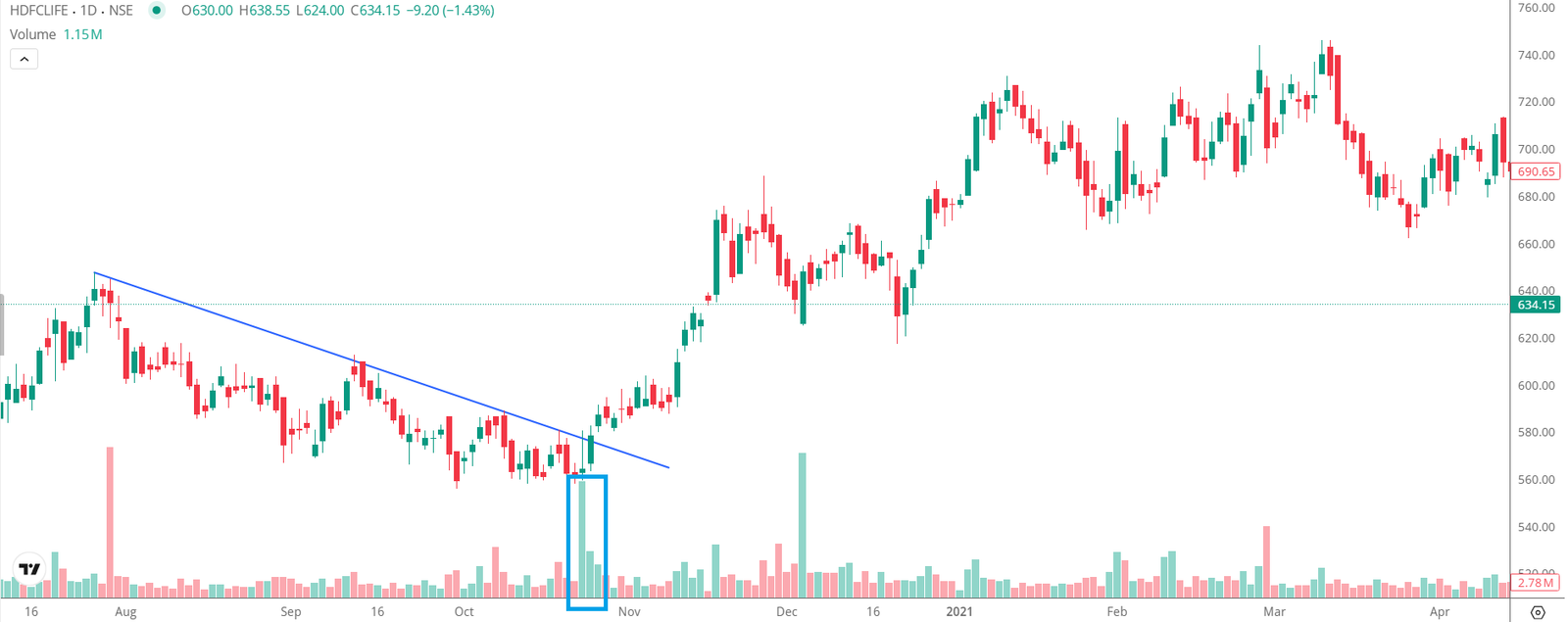
Stop chasing the noise. While everyone else is fighting the algorithmic chop in the banking sector, you can quietly build massive swing-trading wealth in the boring, beautiful charts of India’s top insurance providers.