
Liquidity Zones Explained: Where Smart Money Actually Buys and Sells
Every retail trader has experienced this exact nightmare: You draw a perfect support line on the Bank Nifty 5-minute chart. The price drops down to your line. You buy a Call (CE) option and place a logical stop-loss just below the support.
The market drops, pierces your support line by exactly 15 points, triggers your stop-loss, and then instantly rockets upward for a 200-point rally.
You sit there feeling like the market is personally watching your broker account. You feel targeted.
The brutal truth? You were targeted. But not personally. The market wasn’t hunting you; it was hunting your Liquidity. If you want to stop being the victim of these violent reversals, you have to stop trading invisible lines on a chart and start trading Liquidity Zones like the institutions do.
The “Smart Money” Problem
To understand liquidity, you have to understand the massive problem that Foreign Institutional Investors (FIIs) and Domestic Institutional Investors (DIIs) face every day.
When you want to buy 4 lots of Nifty options, you just hit “Buy,” and your order fills instantly. When an institution wants to buy ₹500 Crores worth of Nifty Futures, they cannot just hit “Buy at Market.” If they do, there won’t be enough sellers at that exact price, and their massive order will push the price up 100 points before it even finishes filling, ruining their average entry price.
For an institution to buy a massive quantity without moving the market, they need an equal amount of people willing to sell at that exact moment. They need a massive pool of counter-party orders. This pool of orders is called Liquidity.
Where Do Institutions Find Liquidity?
Institutions know exactly how retail traders are taught to trade. They know you read the textbook. They know exactly where you place your stop-losses.
And what is a stop-loss?
- If you buy a Call, your stop-loss is an automated Sell order.
- If you buy a Put, your stop-loss is an automated Buy order.
Therefore, if an institution wants to buy a massive amount of the market, they just need to trigger a massive cluster of retail Sell stop-losses.
The Three Major Liquidity Pools
- Double Tops and Double Bottoms: When retail traders see “Equal Highs,” they see a strong resistance wall. They short the market and place their stop-losses just above the highs. Smart money sees this as a massive pool of buy liquidity.
- Previous Day High (PDH) and Low (PDL): The highs and lows of yesterday are the most obvious places retail traders hide their stops.
- Clean Trendlines: If a trendline has been touched three or four times perfectly, thousands of retail traders have trailing stop-losses resting right below it.
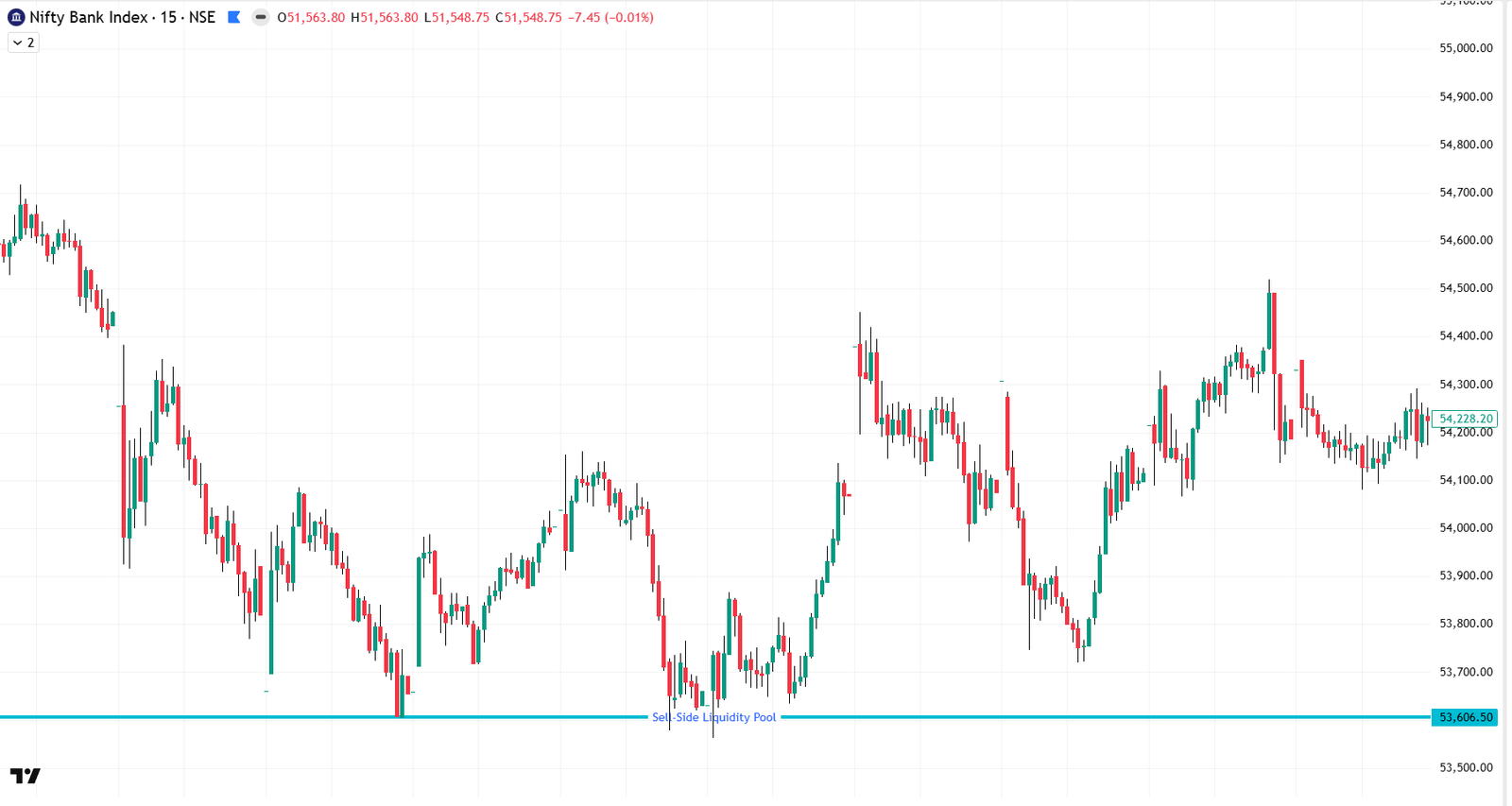
The “Sweep” (How the Trap is Sprung)
Once the institutions identify a Liquidity Zone, they execute the “Sweep.”
Let’s say the Bank Nifty is resting just above a major Double Bottom.
- Institutions will briefly push the price below the Double Bottom support line.
- Two things happen instantly: Breakout traders see the line break and aggressively short the market (Sell orders). Simultaneously, all the retail buyers who were holding long positions have their stop-losses triggered (more Sell orders).
- The market is now flooded with thousands of panic Sell orders.
- The institutions quietly step in and Buy all of them, absorbing the liquidity to fill their massive ₹500 Crore order.
- Once their order is filled, the selling pressure vanishes, and the market violently reverses upward.
You call it a “Fake Breakdown.” Institutions call it “Order Filling.”
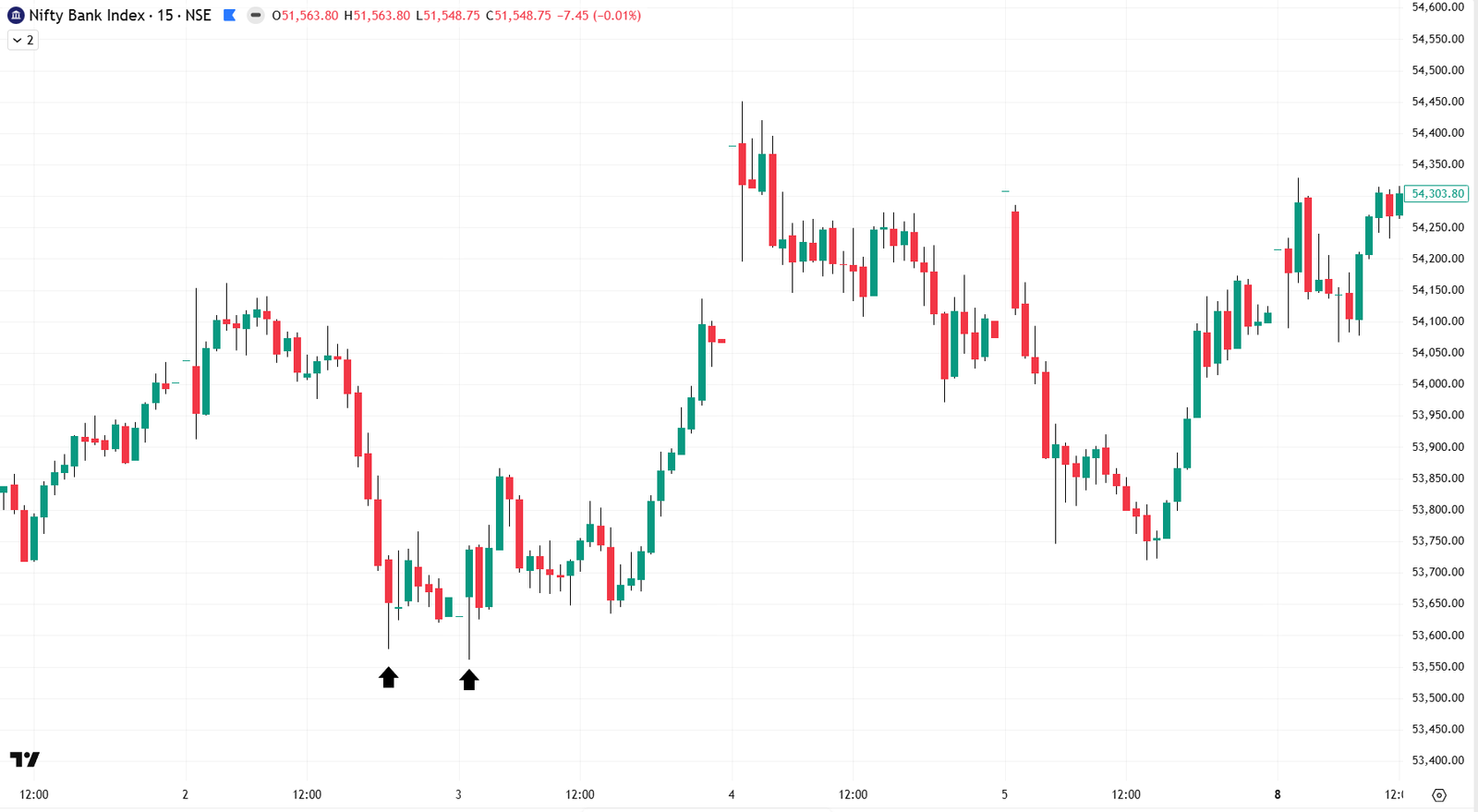
How to Trade the Zones
Once you understand this mechanical truth, you have to completely change your execution logic.
- Stop Hiding in the Crowd: Never place your stop-loss exactly 1 tick below a major support level. That is exactly where the algorithms are programmed to sweep.
- Wait for the Purge: If you want to go long at a major support level, do not buy when the price touches the line. Be patient. Let the market break the line. Let it sweep the retail stops.
- The Entry Trigger: The moment the 5-minute candle closes back inside the support zone (leaving a long wick into the liquidity pool), the purge is complete. That is your signal to execute your SL-Limit buy order. You are now entering the market right beside the smart money, instead of providing liquidity for them.