
The Vega Insight: Why Your Options Lose Value When the Market Moves in Your Direction
Every options trader has a story that sounds exactly like this: You analyze the chart, identify a massive breakout, and buy a Call option. An hour later, the broader market surges 100 points perfectly in your direction. You confidently open your terminal to check your profits, only to find that your option premium is actually down.
You got the direction completely right, yet you still lost money.
If this has happened to you, you have just become a victim of Vega. While most retail traders are obsessively watching the price charts, professional institutions in the high-stakes world of finance are watching the volatility. If you do not understand how Vega manipulates option pricing, you are essentially trading blindfolded.
What is Vega? (The Volatility Multiplier)
Options premiums are not just calculated by the price of the underlying asset and the time left to expiry. They are heavily driven by Implied Volatility (IV).
Implied Volatility is the market’s expectation of future turbulence. Vega is the specific Option Greek that measures exactly how much an option’s premium will change for every 1% change in that Implied Volatility.
- If an option has a Vega of 0.15, and Implied Volatility rises by 1%, the option’s premium will increase by 0.15 points—regardless of what the actual market price does.
- If Implied Volatility drops by 1%, the premium will instantly lose 0.15 points.
The “Insurance Policy” Concept
To understand why IV rises and falls, you have to think about the traditional insurance business.
Imagine a massive hurricane is heading toward a coastal city. What happens to the price of flood insurance? It skyrockets. People are terrified of the unknown, so insurance companies demand massive premiums to take on the risk.
The stock market works the exact same way. In the days leading up to a massive macroeconomic event—like a central banking interest rate decision, a corporate earnings report, or a geopolitical crisis—uncertainty hits a peak. Institutional traders rush to buy options to hedge their portfolios. Because demand is so high, Implied Volatility balloons. This inflates the premium of every single option on the board.
The “Vega Crush” (Post-Event Deflation)
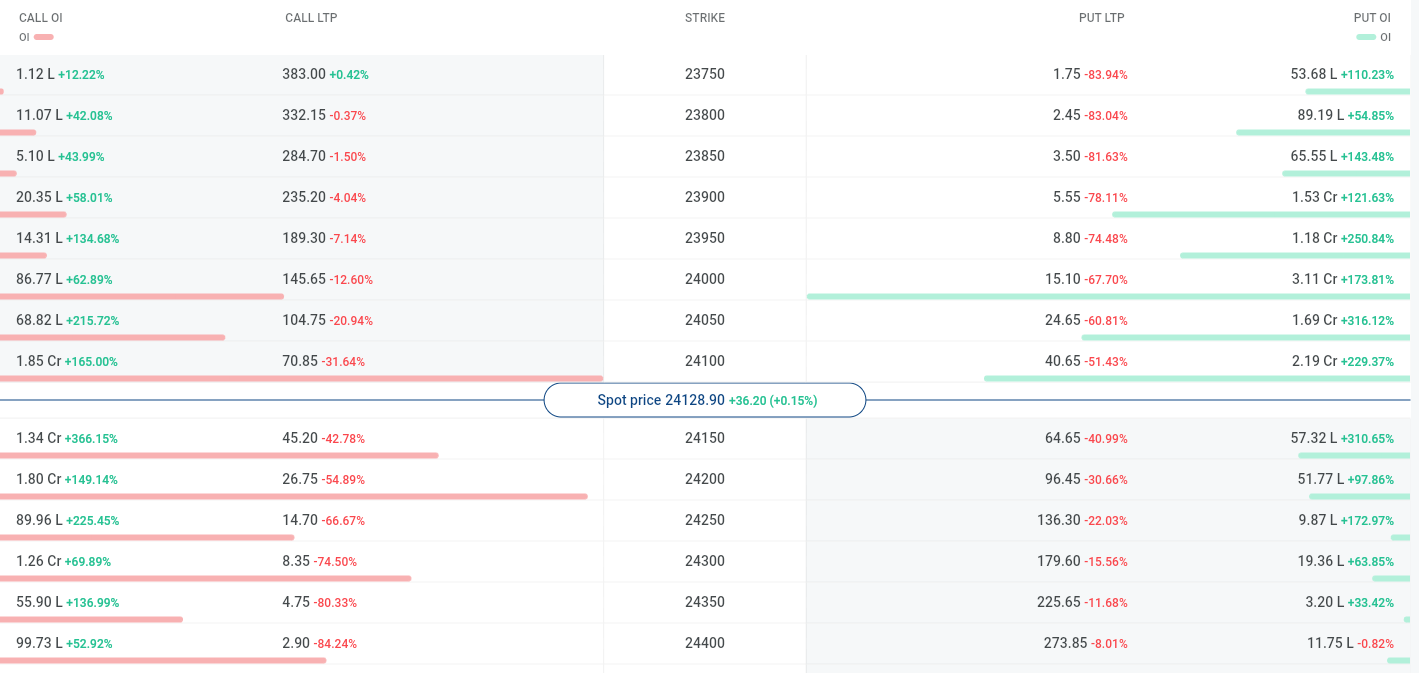
Here is how retail traders get trapped. They wait until 5 minutes before the major central bank announcement, see the market starting to move, and buy a naked option.
The moment the announcement is made, the uncertainty vanishes. The hurricane has passed. Instantly, the market’s fear disappears, and Implied Volatility crashes back down to normal levels.
This violent drop in IV is called a Volatility Crush. Because Vega works in both directions, the sudden collapse in IV literally sucks the extrinsic value right out of the option premium. Even if the market moves 50 points in your direction, the massive drop in Vega completely neutralizes your directional gains, leaving you with a loss.
How to Protect Your Investment Capital
If you want to invest and trade options professionally, you must respect Vega.
- Never buy naked options right before a known event. You are paying the absolute maximum price for volatility.
- Trade the Aftermath. Wait for the news to drop, let the Vega crush happen, and let the options deflate to their true value. Once the dust settles, enter the market based on pure price action.
- Use Spreads. If you absolutely must trade an event, use debit or credit spreads. By buying one strike and selling another simultaneously, the Vega crush on the leg you sold will cancel out the Vega crush on the leg you bought, neutralizing your volatility risk.