
Understanding Theta Factor and the Mathematics of Time Decay
If you buy a stock in the cash market, you can hold it for ten years. It doesn’t matter if the market goes sideways for months; your shares will sit patiently in your account until you decide to sell them.
Options contracts do not afford you that luxury. When you buy an option, you are fighting a brutal, invisible enemy that is constantly stealing money out of your account every single second of the day. This enemy is called Theta, and it is the reason why holding losing options positions hoping for a “miracle bounce” is mathematical suicide.
What is Theta?
Theta represents the rate of Time Decay on an option’s premium. It measures exactly how much value an option will lose with each passing day, simply because time is running out.
In the world of derivatives, time is literal money. When you buy a Call or Put option, you are paying a premium for the time you have to be proven right. As that time disappears, the value of that privilege evaporates.
If an option has a Theta of -5.00, it means that if the underlying market stays completely flat and doesn’t move a single inch, your option premium will lose 5.00 points of value by tomorrow morning.
The Non-Linear Decay Curve
Here is the most critical concept that destroys amateur traders: Theta does not decay in a straight line.
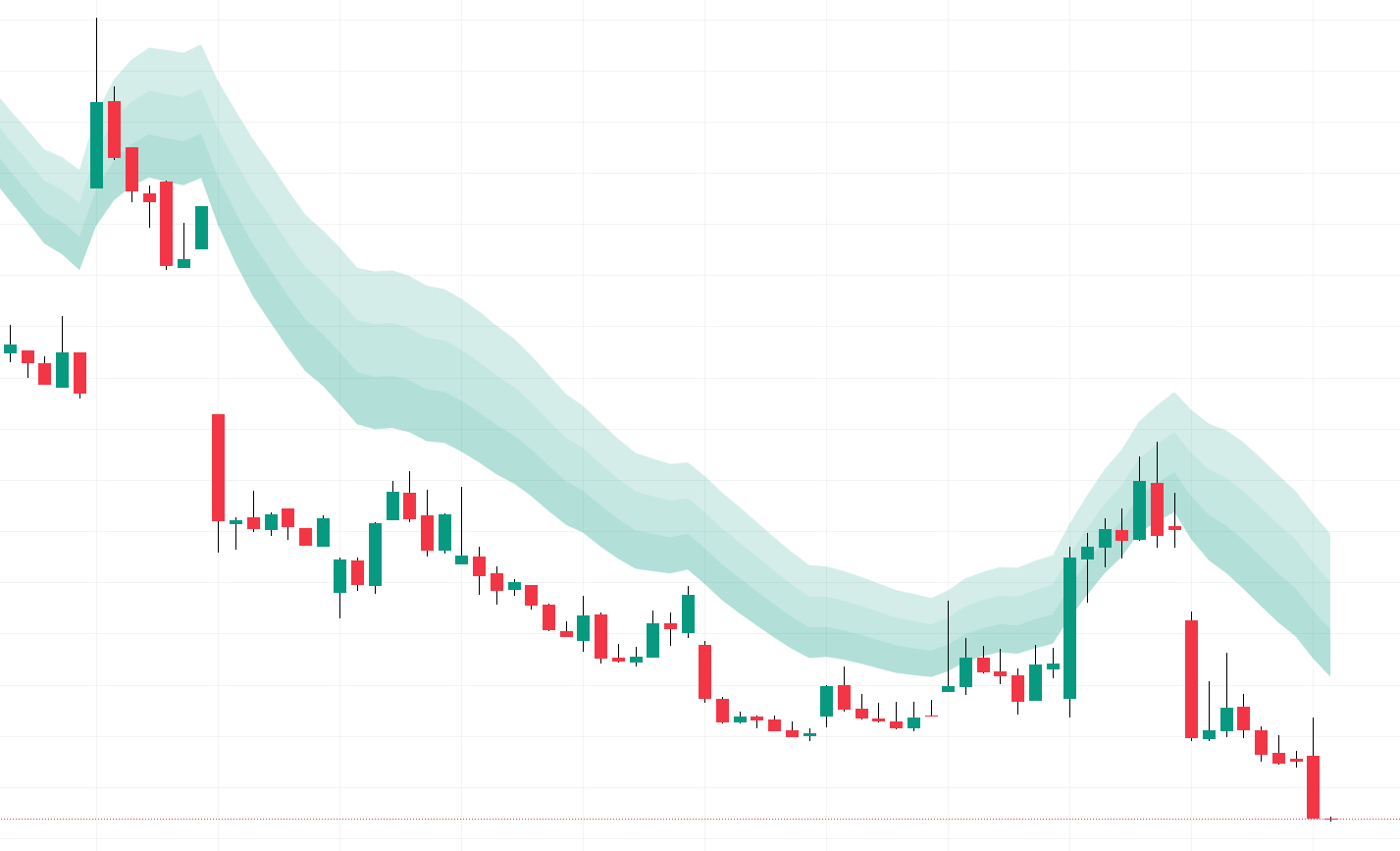
If you buy an option that expires in 60 days, the daily Theta decay is very small. The option loses a tiny fraction of its value each day. However, as the contract enters its final week of life, the Theta decay curve goes vertical. It accelerates aggressively. By the final day of expiry, Out-Of-The-Money (OTM) options lose massive chunks of their value every hour until they ultimately expire completely worthless at 0.00.
The Danger of “Hope Trading”
Let’s look at how Theta exploits bad psychology.
A retail trader buys a Call option. The market drops against them, putting them in a loss. Instead of cutting the trade at their designated stop-loss, they refuse to accept the loss. They use their broker margin credit to hold the position overnight, hoping the market will gap up the next day.
The next day, the market opens completely flat. But the trader’s P&L shows an even bigger loss than yesterday!
Why? Because while the market didn’t move, Theta extracted its daily rent. Every day you hold a losing option, the underlying market has to move even further in your direction just to help you break even. You are fighting a war on two fronts: price and time.
Reversing the Math: The Seller’s Advantage
Professional traders operating at high-level banking and prop desks rarely fight Theta. They weaponize it.
Instead of buying options and racing against the clock, they sell options. When you are an option writer, Theta is your best friend. Every passing minute deposits value into your account. The market can go your way, or the market can do absolutely nothing at all, and you still generate consistent returns purely off the passage of time.
If you are going to remain an options buyer, you must execute your trades with absolute precision. Enter on high momentum, take your profits quickly, and never hold a short-term, expiring contract hostage hoping for a miracle.