
How Market Microstructure Dictates Your Intraday Edge
In the Indian derivatives market, if you don’t understand Market Microstructure, your trading account is the fish.
Retail traders spend years obsessing over moving averages, RSI divergence, and chart patterns. But high-level finance firms, proprietary trading desks, and quantitative algorithms do not care about your chart patterns. They operate on a completely different level. They look at the mechanical plumbing of the stock exchange.
This mechanical plumbing is called Market Microstructure. It is the study of how orders are actually matched, how liquidity is formed, and how latency (speed) affects execution. If you want to protect your investment capital and actually build a mathematical edge, you have to understand the battlefield you are stepping onto.
The Invisible Tax: The Bid-Ask Spread
The moment you click “Buy” on a Nifty options contract, you are instantly in a loss.
Why? Because of the Bid-Ask spread. If buyers are bidding ₹100 for a Call option, and sellers are asking for ₹102, the spread is ₹2. If you use a Market Order to enter the trade, you instantly pay ₹102. If you instantly panic and hit Sell, you will only get ₹100. You just lost 2% of your capital without the underlying index moving a single point.
This spread is not an accident; it is the profit margin for the Market Makers.
- The Insurance Concept: Think of Market Makers like an insurance company. They are taking on the risk of holding the inventory (the options contracts) so you can buy and sell instantly. In exchange for providing that liquidity, they charge you a premium—the spread.
- The Microstructure Edge: A professional scalper refuses to pay this tax. If you are day trading, you must exclusively trade At-The-Money (ATM) options on highly liquid indices (like Nifty 50) where the spread is literally ₹0.05. If you trade illiquid deep Out-Of-The-Money strikes, the spread alone will destroy your win rate over 100 trades.
The Order Matching Engine and Queue Position
The NSE does not care about your feelings; it cares about time and price priority. The matching engine is a ruthless, first-in, first-out (FIFO) calculator.
When a major bank wants to offload 50,000 shares of a stock, their algorithms don’t just dump it at market price. They use Limit Orders to join the queue at a specific price tick. If you place a Limit Order to buy a Put option at ₹85, you are placed at the very back of the line for the ₹85 price level. If the market dips to ₹85 for a split second, the traders who placed their orders 10 milliseconds before you will get filled, and your order will remain pending.
- The Execution Trap: This is why you often see the price touch your exact Limit Order target, but your order doesn’t execute, and then the market runs away without you. You were at the back of the microstructure queue.
- The Solution: To build an edge, professionals anticipate the level. They place their Limit Orders before the price action arrives, securing a front-row seat in the order matching engine.
Slippage and Latency: The Speed War
Why do algorithmic trading firms spend millions of dollars to place their computer servers in the exact same building as the NSE exchange servers?
They are fighting for latency (speed). A retail trader executing a trade from a laptop over home Wi-Fi has a latency of roughly 50 to 100 milliseconds. An institutional algorithm executes in microseconds.
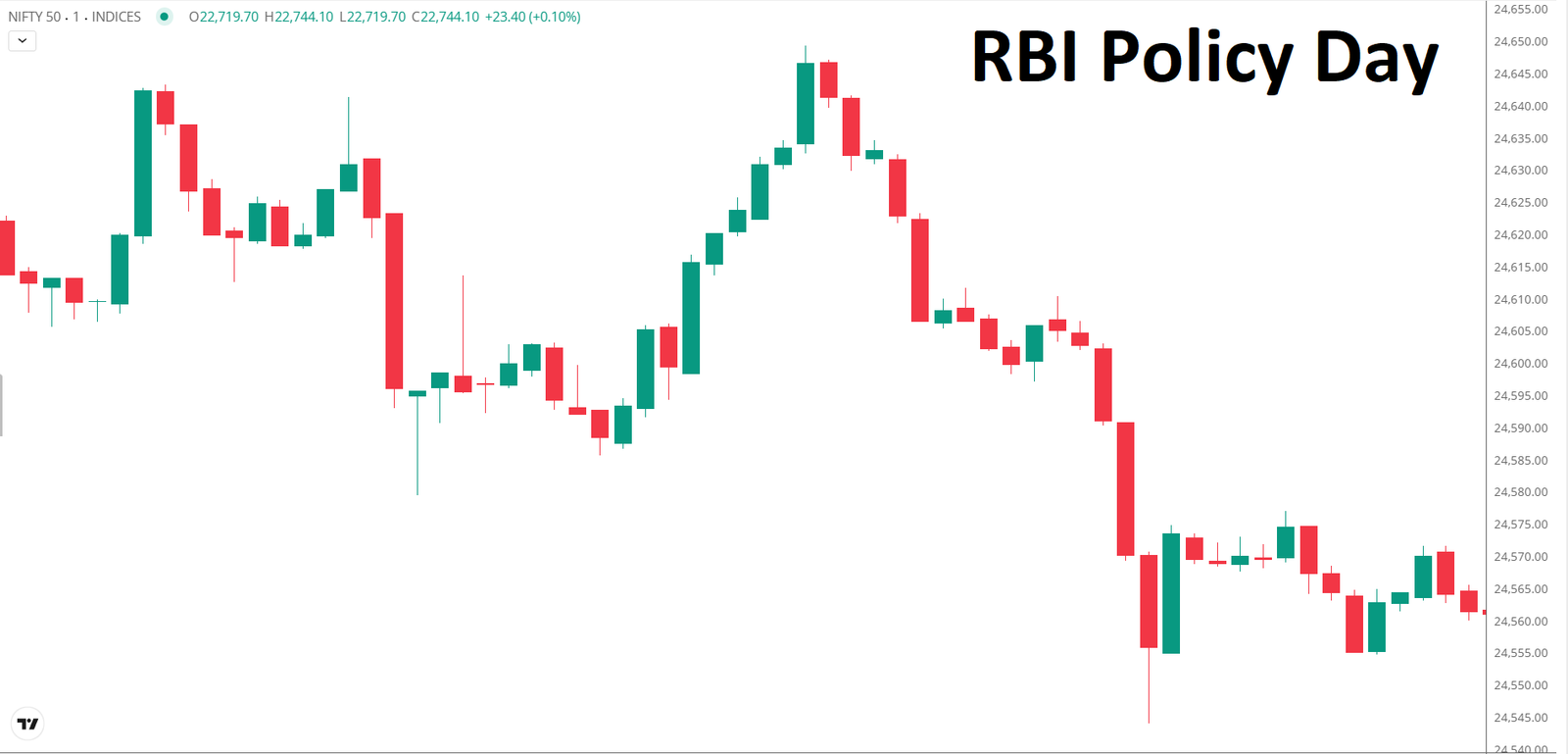
If a massive news event hits the wire, the algorithms will instantly cancel all their pending Sell orders. The liquidity vanishes in a microsecond. If you hit “Buy at Market” during that news spike, your order travels to the exchange, looks for sellers at ₹100, finds none, looks at ₹105, finds none, and finally fills you at ₹120. You just suffered massive Slippage.
How to Trade With a Microstructure Edge
You cannot outrun the algorithms, but you can outsmart them by changing how you execute your trades:
- Stop Using Market Orders for Entries: If you are trying to invest or trade with precision, exclusively use Limit Orders or SL-Limit orders. Demand your price, and let the market come to you.
- Trade High-Liquidity Hours: Microstructure is tightest between 9:45 AM and 2:30 PM. The bid-ask spreads are small, and the order books are thick. Avoid the first 5 minutes of the open (9:15 AM to 9:20 AM) because the order book is thin, spreads are wide, and slippage is guaranteed.
- Understand Tick Size: In the Indian options market, the minimum tick size is ₹0.05. If you are scalping for tiny 3-point targets, the microstructure mechanics will eat a massive percentage of your profits. You must expand your risk-to-reward ratio to make the microstructure “friction” mathematically irrelevant.
Stop viewing the stock market as a picture on a screen. It is a massive, high-speed auction house. Respect the mechanics of the auction, control your slippage, and your profitability will dramatically improve.