
Liquidity Vacuum Moves: Why Price Sometimes Jumps with Almost No Resistance
Every active day trader has witnessed this terrifying and exhilarating scenario: You are watching the chart, and the market is moving at a normal, steady pace. Suddenly, a single 5-minute candle explodes. It travels an enormous distance in a perfectly straight line, completely ignoring all of your minor support and resistance levels.
It feels as though gravity simply turned off.
Amateur traders watch these massive moves and assume some secret, catastrophic news event just occurred. But in the institutional world of high-level finance, these explosive, low-resistance moves are entirely predictable. They happen when the market steps into a Liquidity Vacuum.
If you want to stop getting run over by these lightning-fast spikes and actually learn how to ride them, you must understand the mechanical “air pockets” hidden inside your price charts.
The Architecture of the Order Book
To understand a vacuum, you must understand how price actually moves.
Price does not move because of a green or red candle; it moves because the exchange’s order-matching engine is searching for liquidity. If major banking algorithms want to buy 10,000 contracts at market price, the engine must look up the order book (the Depth of Market) to find 10,000 pending Limit Sell orders to match them with.
- Thick Liquidity: If there are thousands of resting limit orders clustered at every single price tick, the market moves slowly and grinds its way up. There is heavy friction.
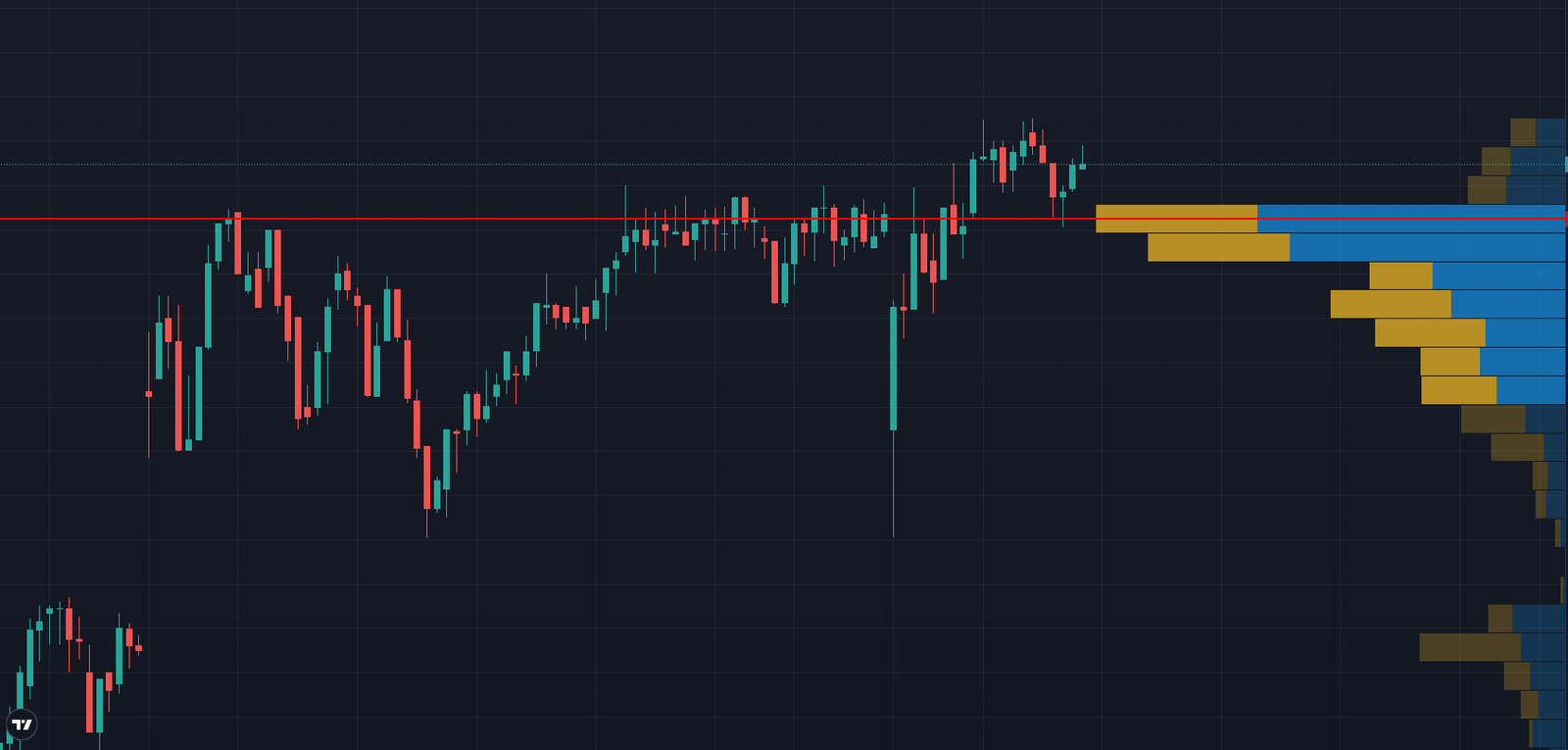
- The Vacuum (Thin Liquidity): A liquidity vacuum is a specific zone on the chart where absolutely no one is waiting to do business. There are no pending limit orders. The order book is completely hollow.
When an aggressive market order steps into a hollow order book, the matching engine cannot find a seller at the next tick. It has to jump 5, 10, or 20 points higher just to find the next available seller. The price literally teleports through the vacuum, creating a massive, elongated candle with almost zero volume friction.
How Vacuums Are Created
Liquidity vacuums do not appear randomly. They are the direct result of previous market trauma.
The most common way an air pocket is created is during a previous capitulation event. Imagine the market crashed violently yesterday afternoon. Because it fell so fast, no historical trading structure was built in that zone. No buyers or sellers spent time negotiating a fair price.
When the market eventually reverses and enters that exact same price zone the next day, there is no historical “memory” of support or resistance. The price will effortlessly slice right back through that empty space until it reaches the next major structural level.
The Institutional Catalyst
What provides the spark that ignites a vacuum move?
Often, it involves aggressive portfolio management. When major funds decide they need to quickly invest massive amounts of capital, or when they suddenly need to buy derivatives as an insurance policy against macroeconomic risk, they use Market Orders.
If they fire these aggressive orders right at the edge of a known liquidity vacuum, the resulting price spike is violent. Furthermore, if retail traders were using broker margin credit to short the market right at the edge of that vacuum, the spike triggers their stop-losses. Those triggered stop-losses become forced buy orders, which aggressively accelerate the price even faster through the empty zone.
The “Air Pocket” Trading Strategy
If you want to survive a liquidity vacuum, you must follow one absolute rule: Never fade a vacuum.
Do not try to be a hero and short the market while it is rocketing through an air pocket. There is no structural resistance to protect your stop-loss.
- Identify the Void: Look left on your daily or hourly chart. Find the zones where price previously collapsed or rallied with zero consolidation. Draw a box around that empty space.
- The Entry: Wait for the price to break into the edge of your drawn box.
- The Target: Once price enters the vacuum, it acts like a magnet pulling toward the next major liquidity pool (the other side of the box). You enter the trade in the direction of the vacuum and set your target exactly at the opposite edge of the air pocket.
Stop fighting invisible walls. Locate the empty spaces on your chart, wait for the institutions to strike the match, and let the lack of friction carry your trade to the target.