
Nifty 50 vs Bank Nifty: Which Index Should You Actually Trade?
Every new retail options trader in the Indian stock market eventually faces the same dilemma. You log into your broker, look at your watchlist, and have to make a choice: Do I trade Nifty 50 or Bank Nifty today?
Most beginners choose Bank Nifty because the premiums move faster, and the daily point swings are larger. They see YouTubers making ₹1 Lakh in 10 minutes on Bank Nifty and want a piece of the action.
What they don’t realize is that Nifty and Bank Nifty have completely different personalities. Trading Bank Nifty with a Nifty mindset is like trying to drive a Formula 1 car through a school zone—you are going to crash. Here is the unfiltered breakdown of how they actually differ and which one you should be trading.
1. Volatility and “Stop Hunting”
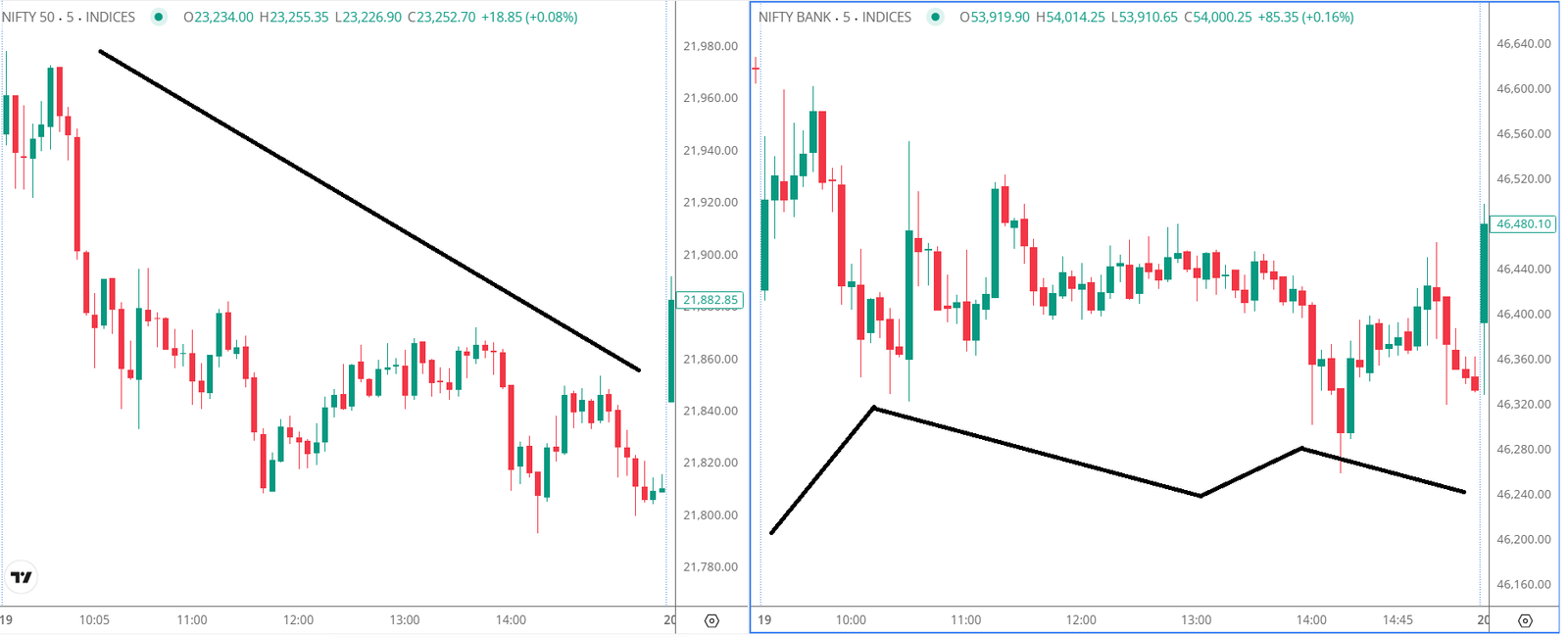
Bank Nifty is the undisputed king of volatility. Because it is highly concentrated into just one sector (Financials), any news about interest rates, RBI policies, or inflation causes the entire index to react violently.
- The Reality: Bank Nifty is notorious for “stop hunting.” It will regularly drop 60 points in a single 3-minute candle, hit everyone’s stop losses, and then immediately reverse and rally 150 points. Its wicks are brutal.
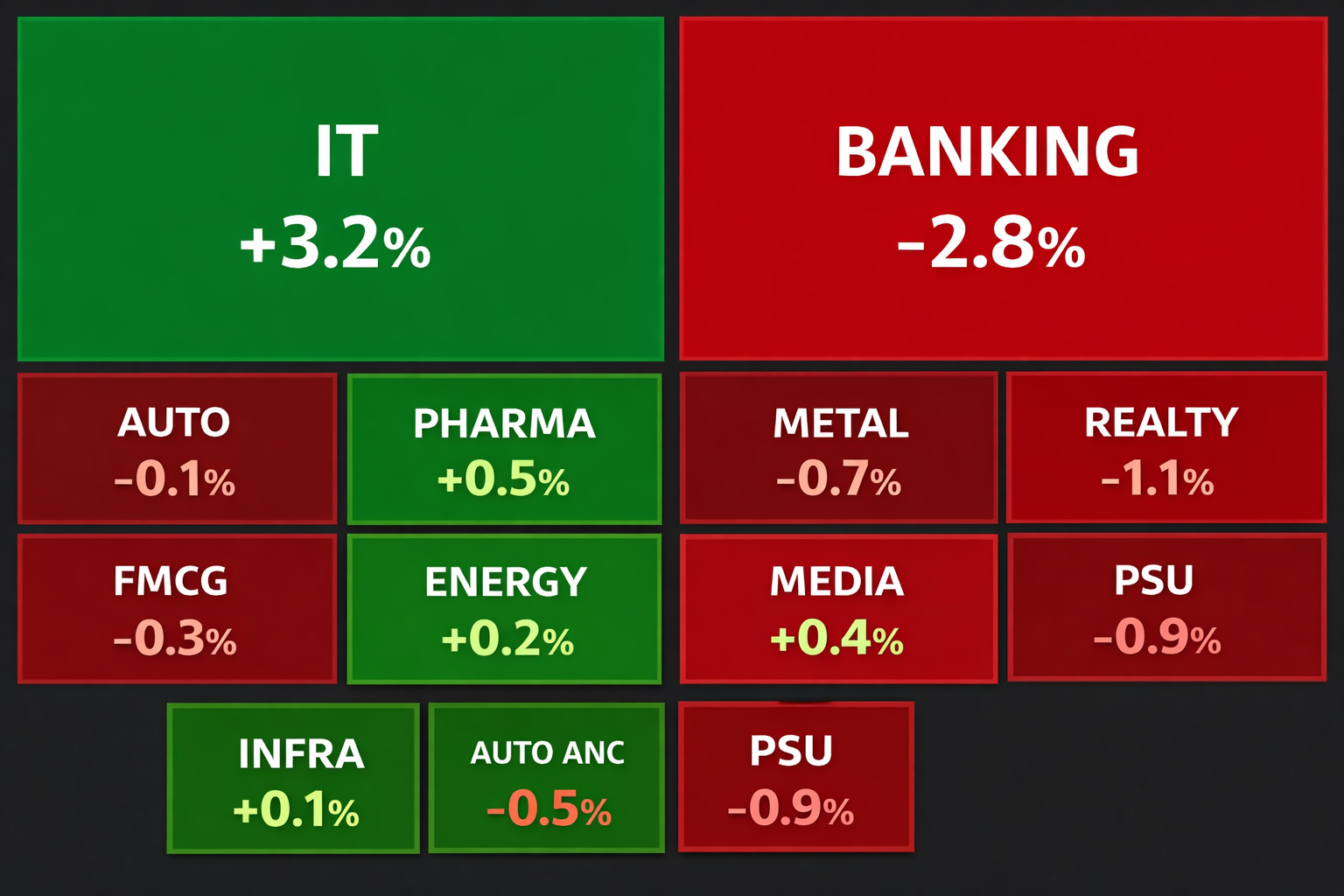
Nifty 50 is a diversified beast. It contains IT, Auto, Pharma, FMCG, and Reliance, along with the banks.
- The Reality: Nifty is heavily buffered. If the banking sector takes a hit, but IT (like Infosys and TCS) and Reliance are rallying, the Nifty will stay relatively stable. It respects technical support and resistance levels far better than Bank Nifty because it requires massive, cross-sector institutional agreement to break a trend.
2. Option Premium Behavior (The Gamma Risk)
Because Bank Nifty is more volatile, its options premiums (especially At-The-Money) are more expensive, and their implied volatility is usually higher.
- If you are a fast scalper trading the Opening Range Breakout (ORB), Bank Nifty premiums will spike 20 to 30 points in seconds. It is a high-octane environment where you must use SL-Limit orders to survive.
- Nifty 50 option premiums move slower. If you are a positional trader holding a trend for 3 hours, Nifty is much easier on your psychology because the premium won’t fluctuate wildly every time a 1-minute candle turns red.
3. The Sector Drag Effect
When you trade Nifty 50, you have to watch the “Big Three”: Reliance, HDFC Bank, and Infosys. Often, Nifty will get stuck in a frustrating sideways range because HDFC is pulling the market down while Reliance is pushing it up. They cancel each other out. If you try to trade Nifty breakouts on a day when the major sectors are fighting each other, you will just lose money to Theta decay.
The Verdict: Which one is for you?
- Trade Nifty 50 if: You are new to options buying, you want to trade structural patterns (like trendlines and chart patterns), you have a smaller account and need tighter stop losses, or you want to hold intraday trends for longer periods.
- Trade Bank Nifty if: You are an experienced, lightning-fast scalper. You have the discipline to cut your losses in 5 seconds, you understand how to track HDFC and ICICI simultaneously, and you thrive in high-momentum, high-stress environments.
Pick one index. Master its personality, understand its heavyweights, and ignore the other one until you are consistently profitable.