
The Leverage Game: How Professional Traders Use Pledged Margin to Scale Their Returns
If you look at the trading account of a struggling retail trader, you will see ₹1,00,000 sitting in pure, raw cash. They use that cash to buy options. If they lose, the cash is gone forever. If they leave it sitting there waiting for a setup, it loses value to inflation.
If you look at the account of a professional systematic trader, you will see almost zero raw cash.
Professionals know that leaving raw cash in a trading account is a terrible financial decision. Instead, they use a highly lucrative banking and finance concept called Collateral Pledging. If you want to scale your trading business without constantly depositing new cash, you need to learn how to play the leverage game safely.
The “Double Engine” Wealth Model
When you just use cash to trade, your money is only working one job. Professional traders force their capital to work two jobs simultaneously.
- Job 1 (The Safe Investment): Instead of keeping ₹5,00,000 in cash, they invest it into safe, long-term financial instruments. This could be Nifty Bees (ETFs), liquid mutual funds, sovereign gold bonds (SGBs), or approved insurance-linked securities. This portfolio sits in their demat account, quietly generating a safe 8% to 10% annual return.
- Job 2 (The Active Trading Credit): They go to their broker and “Pledge” those investments. The broker locks those shares and, in return, gives the trader a line of credit (margin) to trade derivatives.
You are now earning long-term investment returns on your capital, plus you are using the credit margin to generate active monthly income from trading options.
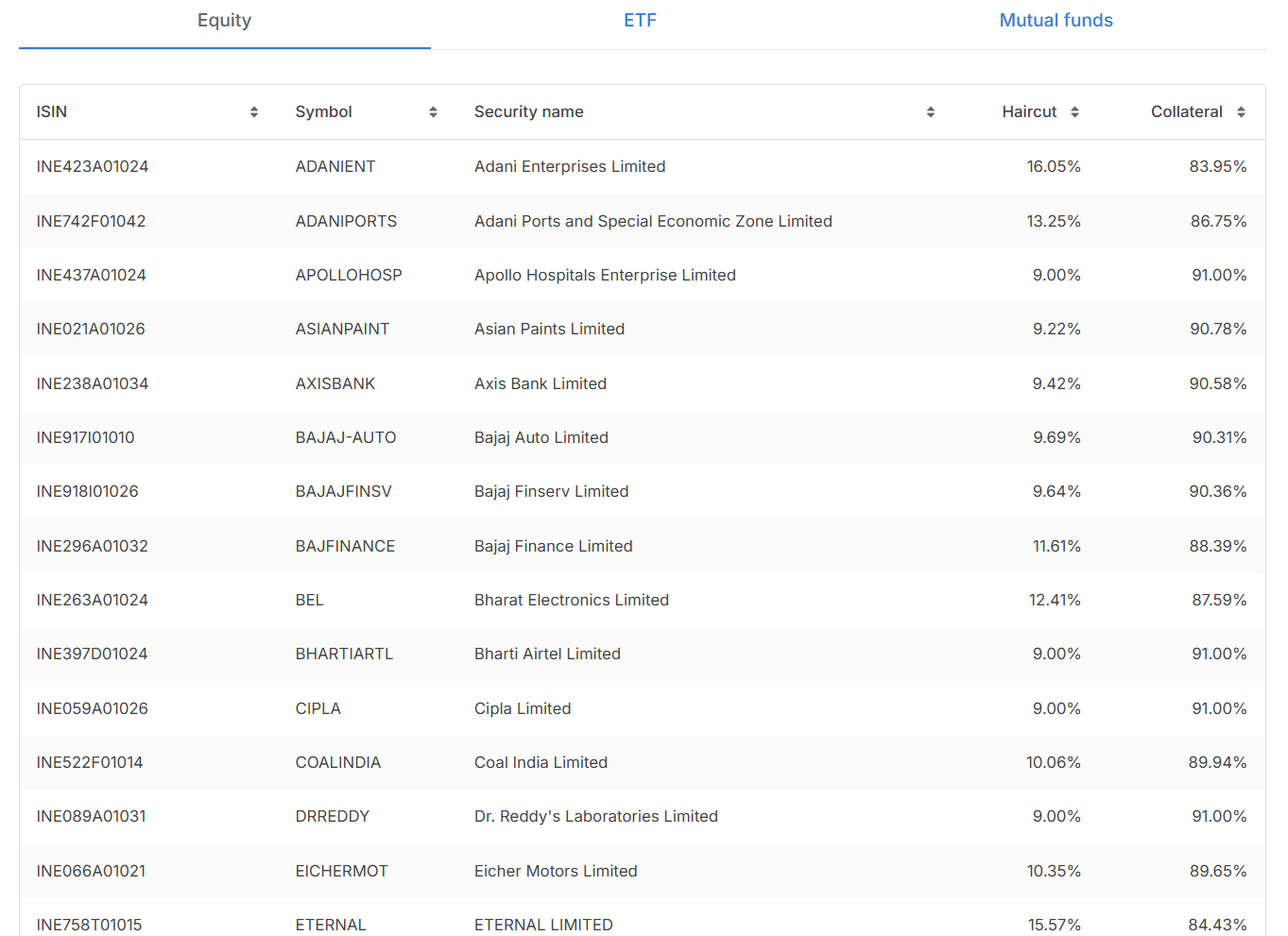
Understanding the “Haircut”
Brokers are not going to give you a 1-to-1 credit ratio. They apply a risk filter called a “Haircut.”
If you pledge ₹1,00,000 worth of a highly volatile banking stock, the broker might apply a 20% haircut. They will only give you ₹80,000 in trading margin. However, if you pledge a highly secure Liquid Mutual Fund, the haircut might only be 8%, giving you ₹92,000 in trading margin.
- The Cash Equivalent Rule: The NSE mandates that if you are using pledged margin to take overnight Option Selling or Futures positions, at least 50% of that margin must come from cash or “cash equivalent” pledges (like liquid bees or treasury bills).
The Danger of Pledged Leverage
Leverage is a double-edged sword. It is the ultimate wealth builder, but it can also trigger a financial disaster if you lack risk management.
If you use pledged margin to sell options, and the market crashes violently against you, your broker will issue a Margin Call. If you do not deposit fresh cash immediately to cover your trading losses, the broker has the legal right to liquidate (sell) your long-term investments to recover their credit.
Stop leaving dead cash in your trading account. Build a stable, long-term investment portfolio, pledge it for collateral, and use that credit strictly for disciplined, high-probability options trading.