
The Psychology of Systematic Trading: Trusting Your Code Over Your Emotions
If you ask 100 retail traders why they lost money on a Nifty expiry day, you will hear the exact same excuses: “I held my losing position hoping it would bounce.” “I closed my winning trade too early because I was scared.” “I took revenge trades after my stop loss was hit.”
Notice what is missing from those excuses? Nobody blames the math. They blame their own psychology.
The human brain is fundamentally wired to be a terrible stock market trader. We feel the pain of a loss twice as intensely as the joy of a win, which causes us to freeze when we should be executing. The only way to survive the Indian options market is to completely remove your emotions from the equation. You must transition from a discretionary trader to a Systematic Trader.
Discretionary vs. Systematic Trading
A discretionary trader looks at a chart, draws a few lines, checks the global news, feels a “gut instinct” about the market direction, and manually clicks buy. They are trading on feeling, which means they are susceptible to fear, greed, and hesitation.
A systematic trader relies entirely on a fixed set of backtested rules. They do not care about the news. They do not care about their gut feeling. If their system says buy, they buy. If it says sell, they sell.
Building the Mechanical Edge
To trade systematically, you need defined, measurable conditions. This is where creating custom technical setups becomes your greatest asset.
Instead of staring at a chaotic chart and trying to guess the momentum, professional system traders code their rules into scripts (like TradingView’s Pine Script). For example, a system might be: Only buy a Nifty Call when the price is strictly above the VWAP, the Supertrend is green, and the RSI crosses 50.
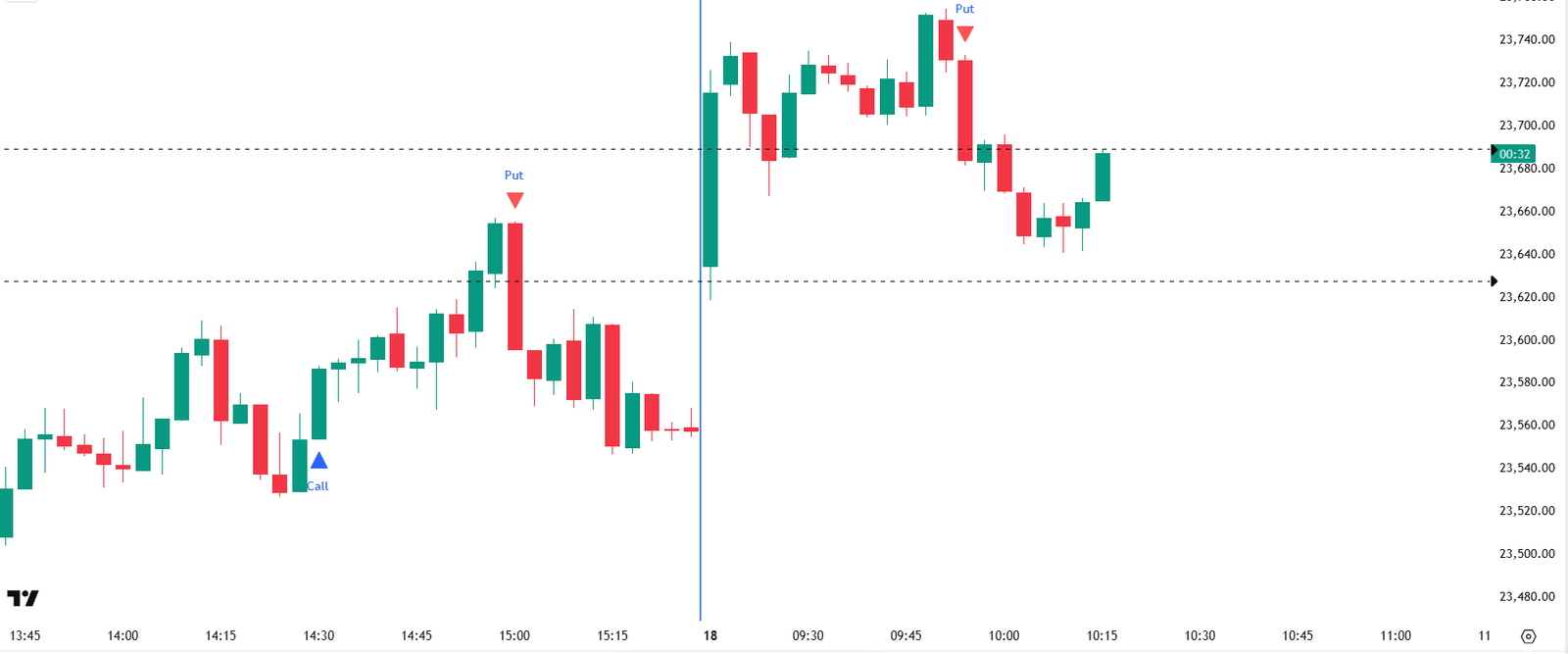
When all conditions are mathematically met, the indicator fires a signal. There is no debate. There is no hesitation.
Automating the Execution
The final step in removing emotion is automating the order execution.
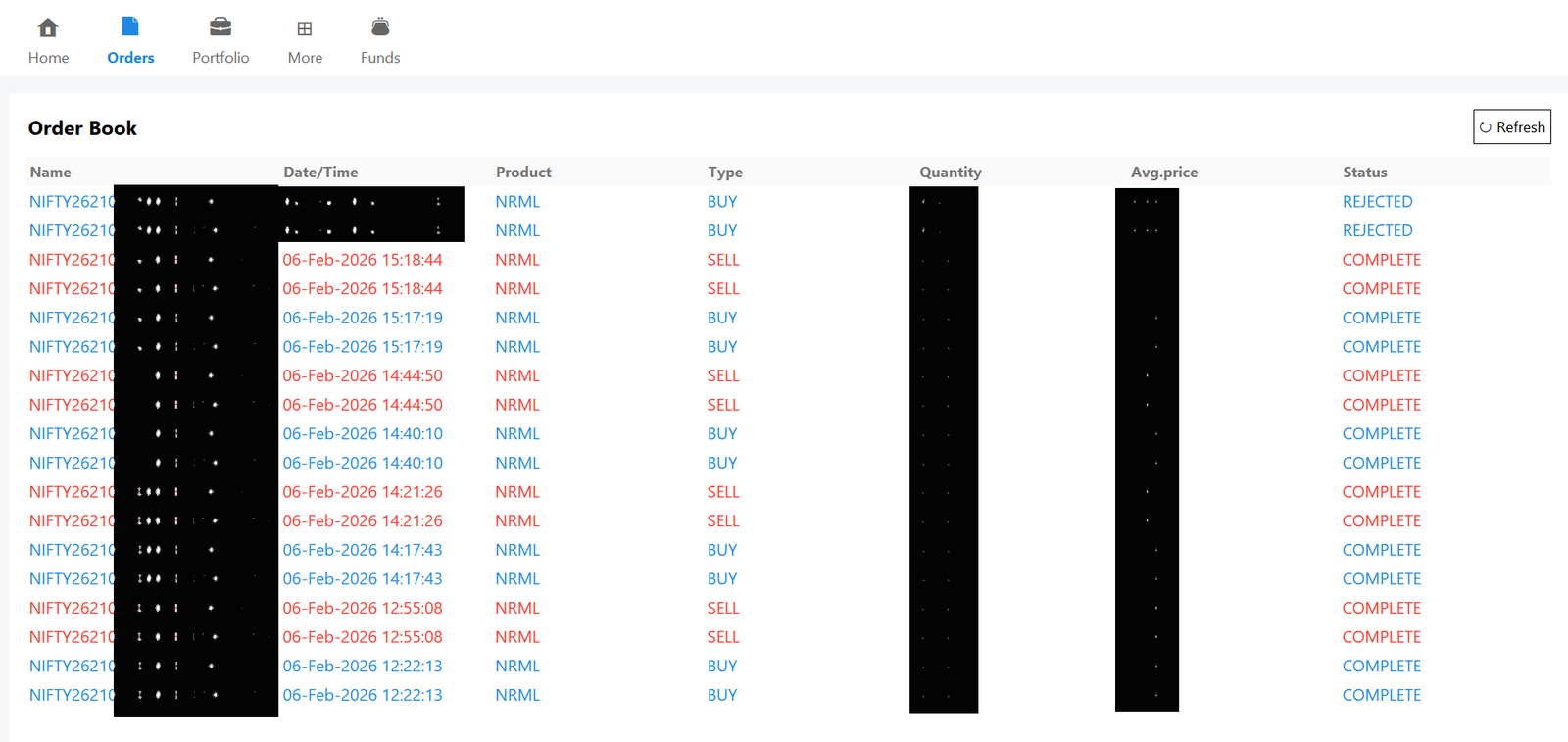
Even if you have a perfect system, physically pressing the “Buy” button can still trigger anxiety, especially if you are managing positions across multiple broker accounts. By using API-connected trading terminals (built with Python or similar languages), you can bridge the gap between your chart and your broker.
When your Pine Script signal fires, the software instantly shoots an SL-Limit order to your broker. It automatically calculates your position size and places a strict stop loss in the system.
The Liberation of the System
When you fully embrace systematic trading, your daily stress vanishes. You are no longer fighting the market; you are just managing a mathematical probability engine.
You will still have losing trades, but you won’t care, because you know your system’s historical win rate and maximum drawdown. Stop trading with your feelings. Build your indicators, backtest your data, automate your execution, and let the code build your wealth.